
What is Astrotourism? The Complete Guide to Dark Sky Travel
Over 80% of the global population lives under skies washed out by artificial light. In North America and Europe, that figure reaches nearly 99%. For hundreds of millions of people, seeing the Milky Way or watching a meteor shower from their home is no longer possible.
This widespread light pollution has sparked one of the fastest-growing movements in modern travel: astrotourism.
Astrotourism is the practice of traveling to specific, low-light-pollution destinations to experience natural night skies, observe celestial events, and reconnect with the cosmos.
As a Delegate for DarkSky International and a member of the Board of Directors for the Astronomical Society of the Pacific (ASP), I have dedicated years to advocating for night-sky preservation and public science literacy.
As an artist and astrophotographer, my long-term project, Star Explorer, has taken me to some of the most remote and pristine night skies on Earth, from the stone monoliths of Easter Island to the alien dragon blood tree forests of Socotra Island. I document these extreme dark-sky expeditions in hand-crafted zines and field journals for my Patreon community, sharing what true, raw darkness looks and feels like across different cultures.
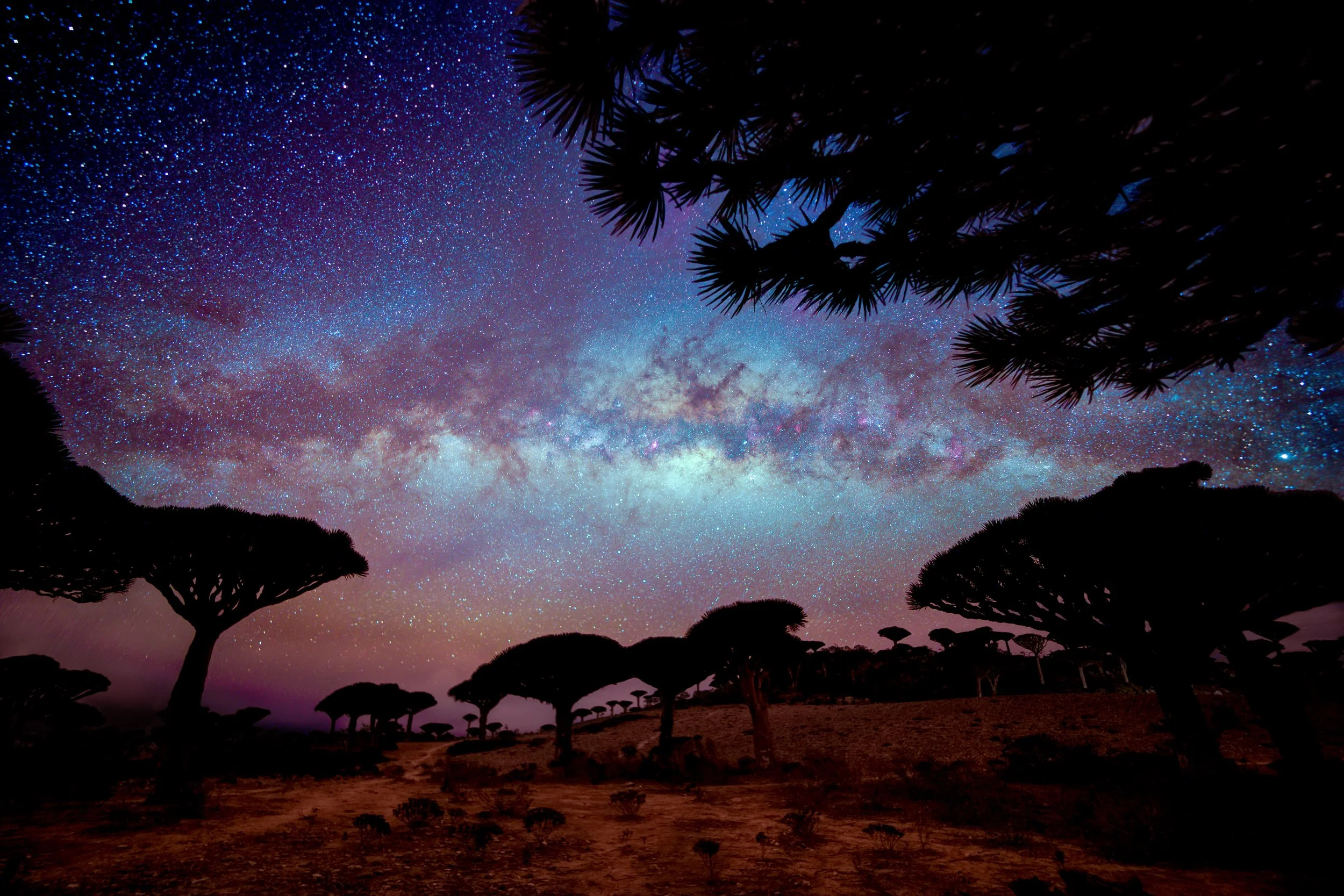
The Dragons Blood Tree forest - Socotra, Yemen
Whether you want to witness your first meteor shower from a desert camp, learn night photography alongside a pro, or simply sit under an endless canopy of stars, here is everything you need to know about dark sky travel.
1. Why Astrotourism Matters
For thousands of years, the night sky was humanity's clock, calendar, compass, and primary source of evening stories. Rapid urban growth and unshielded artificial lighting have erased that view within just a few generations.
Dark sky travel is about reclaiming that connection.
It is also part of a wider shift toward mindful, low-impact travel. Stargazing does not rely on noisy attractions or crowded tour buses. It requires open space, clean air, and quiet patience. Sitting under true darkness resets circadian rhythms, lowers daily stress, and provides a humbling sense of scale that modern city life blocks out.
2. Types of Astrotourism Experiences
Dark sky travel covers a wide range of activities, depending on what you want out of the experience:
Visual Stargazing and Night Interpretation: Guided sessions focused on naked-eye observation, deep-sky binoculars, and large telescopes, paired with the science and cultural mythology of the constellations.
Astrophotography Workshops: Hands-on instruction where beginners and hobbyists learn how to use manual camera settings, balance shutter speeds, and capture the core of the Milky Way or deep-sky objects.
Celestial Event Travel: Trips timed to specific geographic paths to witness rare phenomena like total solar eclipses, auroral activity (the Northern and Southern Lights), and peak annual meteor showers like the Perseids or Geminids.
Dark Sky Glamping: Boutique stays at off-grid desert camps, domes, or canvas tents designed with low-impact red lighting and clear roof panels for stargazing from bed.
3. World-Class Astrotourism Destinations
While dark skies exist on every continent, certain regions stand out for their dry climates, high elevations, and active dark sky preservation efforts.
The American Southwest (Nevada, Utah, and Arizona)
The Colorado Plateau and the Great Basin Desert host the highest concentration of certified International Dark Sky Parks in the world. High-elevation plateaus and vast expanses of protected public land create ideal conditions for viewing the Milky Way from March through October.
Remote Island Outposts (Socotra, Easter Island, and the Canary Islands)
Isolated islands offer a unique window into the cosmos because they sit hundreds or thousands of miles away from major continental light domes. Locations like Easter Island in the South Pacific or Socotra in the Arabian Sea offer pure Bortle Class 1 darkness over surreal, ancient landscapes. Closer to Europe, the volcanic peaks of La Palma and Tenerife in the Canary Islands rise above maritime cloud layers, offering clean, steady atmospheric conditions for stargazers.
The Deserts of Egypt and Jordan (The White Desert and Wadi Rum)
The vast desert corridors of the Middle East combine ancient human history with deep darkness. Spending the night at a traditional camp among the chalk formations of Egypt's White Desert or the sandstone cliffs of Wadi Rum offers an unforgettable look at the stars framed by dramatic geological landscapes.
The Atacama Desert, Chile
Located high in the Andes Mountains, the Atacama is the driest non-polar desert on earth. Its lack of moisture and cloud cover makes it the premier global hub for international research observatories and commercial astro-tours.
4. How to Plan a Dark Sky Trip
Planning an astrotourism trip requires a different mindset than booking a typical city vacation. A few key environmental factors determine the quality of your view.
Check the Moon Phase First
The moon is the biggest source of natural light pollution. A bright full moon washes out deep-sky objects and the Milky Way just as much as city streetlights.
Always schedule your trip during the New Moon window, roughly the week before, during, and after the new moon. This gives you dark, moonless skies throughout the prime evening hours.
Use the Bortle Scale
The Bortle scale rates night sky darkness from Class 9 (inner-city light pollution) down to Class 1 (pure, unpolluted natural darkness). For an incredible view where the Milky Way is bright and casts subtle shadows on the ground, look for locations rated Bortle Class 1, 2, or 3.
Factor in Elevation
Higher altitudes (4,000 feet and above) place you above dense layers of atmospheric haze and humidity. This reduces star twinkling and makes faint celestial objects appear noticeably sharper to the naked eye.
Bring the Right Gear
Red-light headlamp: White light ruins your night-adjusted vision, which takes 20 to 30 minutes to develop. Red light allows you to walk safely without resetting your eyes.
Warm layers: Clear night skies allow ground heat to radiate away quickly. Desert and mountain temperatures drop fast after sunset, so pack beanies, fleece jackets, and windbreakers even during summer trips.
Reclining camp chairs: Tilting your head back while standing causes neck strain within minutes. A reclining chair lets you look straight up comfortably for hours.
5. Dark Sky Conservation: Protecting the Night
Astrotourism plays a critical role in conservation. When travelers visit rural towns and national parks specifically to see the stars, it proves to local leaders that natural darkness has immense economic value.
Through organizations like DarkSky International, communities around the world are adopting smarter lighting practices. Simple steps like shielding light fixtures, pointing beams downward, and choosing warmer light temperatures keep streets safe while protecting the night sky for everyone.
Frequently Asked Questions
What does Bortle Class 1 mean?
Bortle Class 1 represents the darkest sky possible on Earth. Under Bortle 1 conditions, there is no noticeable artificial light pollution, thousands of stars are visible to the naked eye, and the core of the Milky Way shows intricate detail and depth.
Do I need a telescope to enjoy astrotourism?
Not at all. Most dark sky travelers rely entirely on naked-eye viewing. While binoculars or telescopes let you zoom in on planetary rings and distant nebulae, the vast sweep of the Milky Way and bright constellations look best with your own eyes.
What is the best month for astrotourism in the United States?
For viewing the galactic core of the Milky Way, the best months are between April and October. For seeing crisp winter constellations like Orion and catching bright meteor showers, the winter months (November through February) offer clean, cold atmospheres.
Experience Dark Skies with Starlight Voyages
At Starlight Voyages, we build boutique small-group journeys around the world's most incredible night skies and cultural landscapes.
Whether you want to photograph the Milky Way over Southwest desert canyons or sleep beneath the stars at remote heritage camps, explore our upcoming Dark Sky Voyages & Expeditions to join our next trip.