
The Beginner’s Guide to a Southwest Stargazing Road Trip
The American Southwest holds the highest concentration of certified International Dark Sky Parks on the planet. High elevations, dry desert air, and vast expanses of protected public land create a rare pocket of true, unpolluted darkness.
If you have only ever seen the night sky from a city or suburb, looking up in southern Utah or rural Nevada is a shock. You do not just see a few constellations. You see thousands of sharp, glittering stars, visible satellites gliding past, and the glowing, textured arch of the Milky Way spanning the horizon.
Planning a road trip through these dark sky corridors is one of the most rewarding adventures in North America. Here is your complete beginner guide to mapping out the route, timing the moon phases, and staying safe in the desert after dark.
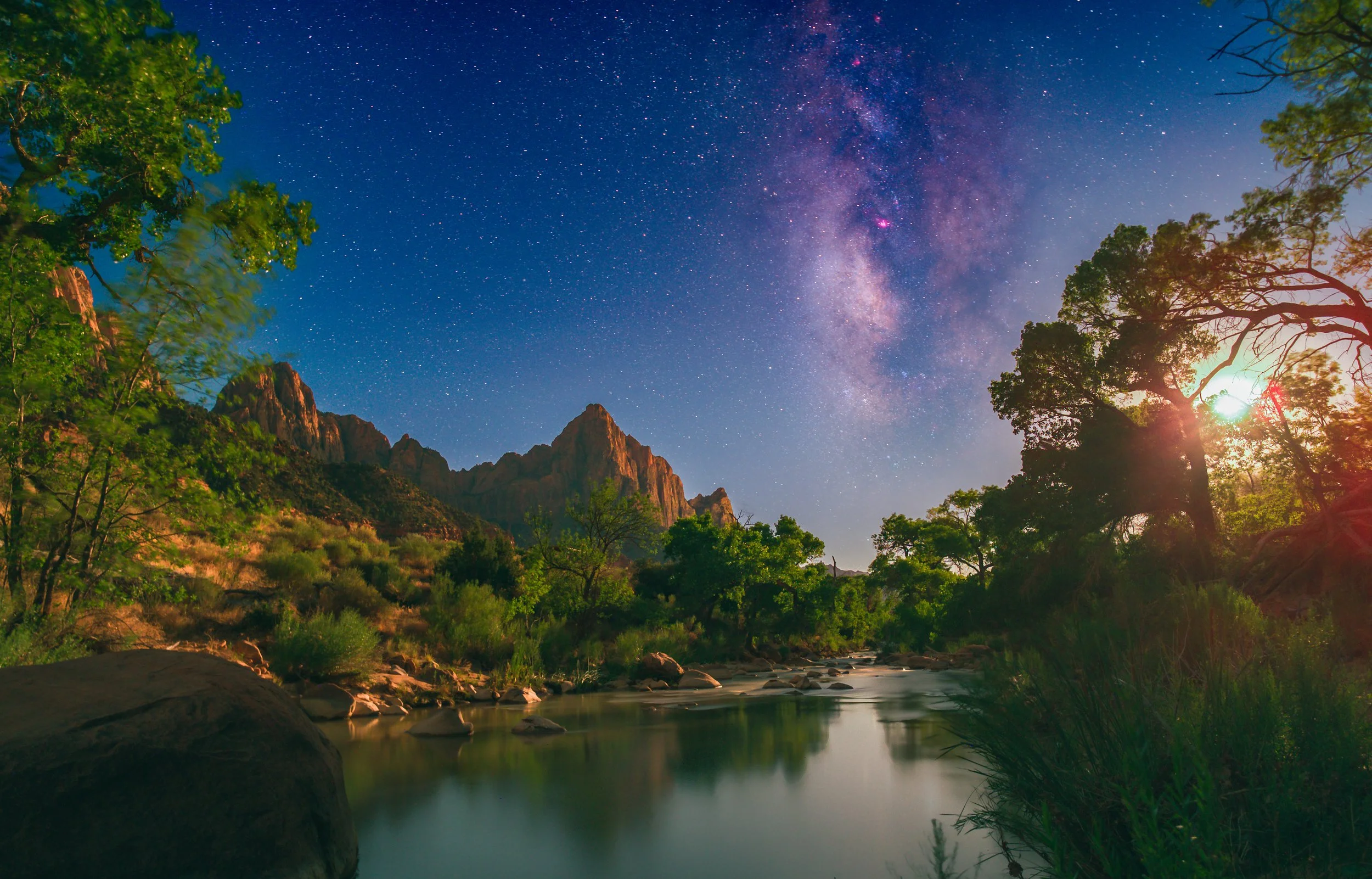
Zion National Park
1. Choosing Your Starting Hub: Las Vegas vs. Salt Lake City
Most dark-sky loops in the Southwest start from one of two major airport hubs. Both offer cheap flights, plenty of rental cars, and quick access to deep desert darkness.
Starting in Las Vegas, Nevada
Las Vegas is the ideal gateway if you want a fast southern loop focused on southern Utah and the eastern Mojave desert. Within an hour of leaving the neon of the Strip, you hit rural desert skies.
Best for: Valley of Fire, Death Valley borders, Zion perimeter, and Bryce Canyon.
Drive times: Shorter driving stretches between scenic stops.
Starting in Salt Lake City, Utah
Salt Lake City works best for travelers looking to hit central and northern Utah. You start closer to higher-elevation plateau parks with cooler summer night temperatures.
Best for: Capitol Reef, Goblin Valley, Bonneville Salt Flats, and Great Basin National Park.
Drive times: Slightly longer initial drive south, but faster access to Utah's emptiest red-rock regions.
A standard rental crossover or small SUV is plenty for this trip. Most primary stargazing viewpoints are accessible by paved park roads or well-graded gravel surfaces.
2. The Classic 5-Day "Dark Sky Loop" Itinerary
This 5-day route starts in Las Vegas, moves up through southern and central Utah, and loops back down. It gives you some of the best Bortle Class 1 and 2 skies in the world without requiring endless hours behind the wheel each day.
Day 1: Valley of Fire & Moapa Valley, Nevada
Sky Quality: Bortle Class 2 to 3
The Route: Drive 55 miles northeast of Las Vegas along I-15.
What to Expect: Brilliant red sandstone formations that look like an alien world. The state park closes to day visitors at sunset, so plan to stay at an in-park campsite or pull off on nearby BLM public lands in Moapa Valley for wide-open horizon views.
Day 2: Greater Zion & Cedar Breaks, Utah
Sky Quality: Bortle Class 2
The Route: Head north across the Utah border toward Springdale and Cedar City.
What to Expect: While the bottom of Zion Canyon can feel narrow with high canyon walls blocking parts of the sky, nearby high points like Cedar Breaks National Monument sit over 10,000 feet above sea level. The high altitude puts you above dense atmospheric haze, delivering crisp, twinkling starlight.
Day 3: Bryce Canyon National Park, Utah
Sky Quality: Bortle Class 1 to 2
The Route: Drive 1.5 hours east along Utah State Route 12.
What to Expect: Bryce Canyon is a legendary stargazing location. Viewpoints like Inspiration Point and Sunset Point let you look out over thousands of rock hoodoos silhouetted beneath a dense canopy of stars. Rangers frequently host evening astronomy talks at the visitor center.
Day 4: Capitol Reef & Torrey, Utah
Sky Quality: Bortle Class 1
The Route: Continue along Highway 12 through the Grand Staircase-Escalante region to Torrey.
What to Expect: Torrey was the first certified International Dark Sky Community in Utah. Capitol Reef National Park receives far fewer visitors than Zion or Bryce, meaning zero traffic and complete silence at night. Panoramic pullouts along Highway 24 offer uninterrupted views of the galactic core.
Day 5: Escalante and Kanab Backcountry
Sky Quality: Bortle Class 1 to 2
The Route: Loop back south toward Kanab before returning to Las Vegas.
What to Expect: Vast public lands with incredible desert stillness. Pull over near the Coral Pink Sand Dunes or along Cottonwood Canyon Road for private stargazing with no other cars in sight.
3. Timing the Trip: The 3 Rules You Cannot Ignore
Great stargazing depends heavily on good timing. A single mistake with your calendar can wash out the stars completely.
The Moon Phase Rule
This is the most critical rule of all. A bright moon washes out faint starlight just as badly as city light pollution.
Always check a lunar calendar before booking your flights. You want to travel during the New Moon window, which is the 7 to 10-day period when the moon is either completely dark or rises very late in the night. If you visit during a Full Moon, the desert landscape will look beautiful in the moonlight, but you will miss the Milky Way.
The Seasonal Trade-off
Spring to Early Fall (April through October): This is prime time for viewing the bright center of our galaxy (the Milky Way core). Nights are warm and pleasant, but summer days in the desert can be hot.
Late Fall to Winter (November through March): Nights are cold, but the winter sky brings brilliant constellations like Orion, the Pleiades cluster, and Sirius. Atmospheric air is often crisper and clearer in cold months.
Monsoon Awareness (July and August)
The Southwest desert experiences a summer monsoon pattern from mid-July through late August. While days often start clear, afternoon and evening thunderstorms can build up, bringing heavy cloud cover that blocks the night sky. Keep an eye on local satellite cloud cover maps during these months.
4. Desert Safety and Night-Driving Logistics
The desert is peaceful at night, but it demands respect and basic preparation.
Download Offline Maps: Cellular reception frequently drops to zero between towns and inside park canyons. Download your entire route on Google Maps or Apple Maps before you set out so you never lose navigation.
Watch for Wildlife: The biggest driving hazard in rural Nevada and Utah is wildlife on the road. Mule deer, elk, jackrabbits, and open-range cattle regularly cross dark highways. Keep your speed down after dark and use your high beams whenever there is no oncoming traffic.
Prepare for Rapid Temperature Drops: Clear desert skies mean heat radiates off the ground quickly. A sunny 85°F afternoon can easily turn into a 45°F night. Always keep heavy jackets, beanies, and blankets in the back of your car.
Fuel Up Early: Small desert towns often close their gas stations early in the evening. Never let your tank drop below a quarter full when driving into remote dark-sky zones at night.
5. Simple Gear Checklist for Your Car
You do not need complicated gear to enjoy the night sky. A few basic items will make your road trip much more comfortable:
Red-Light Headlamps: White light from phones or flashlights resets your eye's night adaptation, taking up to 30 minutes to recover. Red lights preserve your night vision so you can see dim stars while walking safely.
Reclining Camp Chairs: Standing and tilting your neck back gets tiring after ten minutes. Cheap folding camp chairs or zero-gravity recliners let you lean back and watch the sky effortlessly.
A Pair of 7x50 or 10x50 Binoculars: Binoculars are easy to pack and provide stunning, sharp views of Jupiter’s moons, the craters of our moon, and bright gas clouds like the Orion Nebula.
Thermos for Hot Drinks: A hot thermos of tea, coffee, or hot chocolate keeps you warm during long hours under the stars.
Frequently Asked Questions
Do national parks stay open at night for stargazing?
Yes. Most Southwest national parks (including Bryce Canyon, Zion, Capitol Reef, and Death Valley) are open 24 hours a day, 365 days a year. You can drive in after dark to stargaze as long as you have a valid park pass and park in designated turnouts.
Do I need a four-wheel-drive vehicle for this road trip?
No. All the primary stargazing viewpoints listed in this guide are accessible via paved highways and maintained park roads. A standard sedan or crossover is completely fine.
How long does it take for human eyes to adjust to the dark?
It takes roughly 20 to 30 minutes of sitting in total darkness for your pupils to fully dilate and for your eyes to build up the chemical rhodopsin, which allows you to see faint stars and the details of the Milky Way. Avoid looking at bright phone screens during this time.
Experience the Southwest with Starlight Voyages
Prefer to skip the car rentals, route scouting, and desert logistics? Join one of our intimate, small-group Southwest Stargazing Voyages. We handle the dark-sky basecamps, hot drinks, and night navigation so you can relax beneath the stars.