
South Korea for First-Timers: Essential Apps, Transit, and Practical Travel Advice
Planning your first trip to South Korea can feel a little intimidating. While Seoul is one of the safest and most modern cities on earth, its digital systems and daily logistics work quite differently from the US or Europe.
Old blog posts often tell you that foreign apps do not work, taxis are hard to flag down, and you have to rely entirely on cash. A lot of that information is out of date.
Here is what you actually need to know before landing at Incheon International Airport, from how navigation works on your phone to choosing the right subway card.
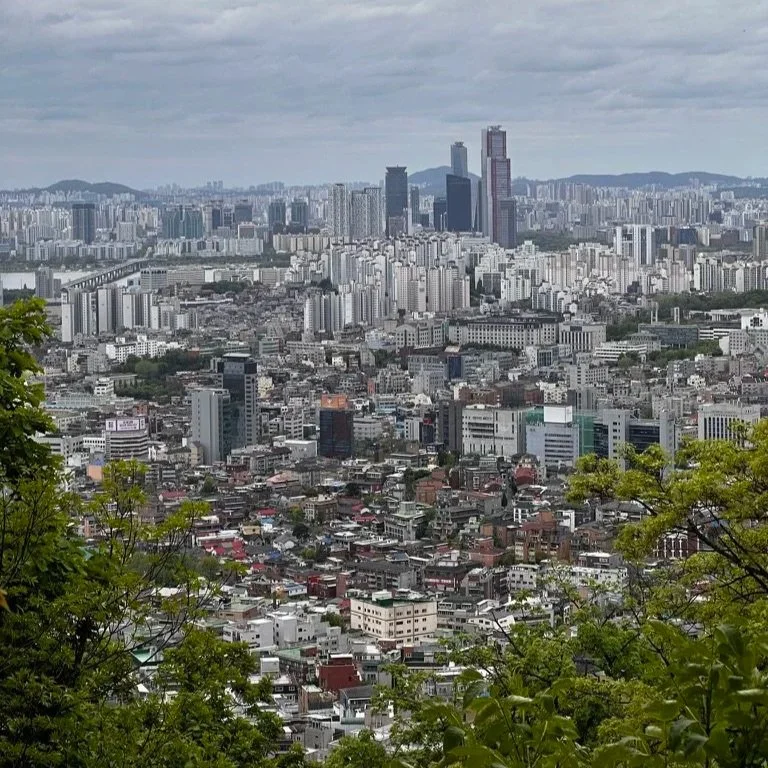
1. The Map Situation: What Works and What Fails
South Korea enforces strict national security laws regarding the export of domestic mapping data. Because of this, global navigation apps do not work the same way they do back home.
Google Maps vs. Naver Map
Google Maps can show you where a restaurant or museum is located, and it can give you basic public transit schedules. However, Google Maps does not provide reliable walking or driving turn-by-turn directions in South Korea. If you try to walk through Seoul using Google Maps, the route will often break down or give you bizarre detours.
Download Naver Map or KakaoMap before your flight:
Both apps support English and offer exact, step-by-step walking routes through alleyways and underground shopping malls.
Naver Map lets you search phone numbers and English business names directly.
The apps tell you the exact subway exit number to use. Seoul subway stations are massive, and taking the wrong exit can leave you four blocks away on the wrong side of an eight-lane avenue.
2. Calling Taxis: Uber and Ride-Hailing
Years ago, booking a ride without a Korean phone number and a local bank card was nearly impossible for tourists. Today, it is simple.
Uber (UT Taxi): Your standard Uber app works in South Korea. It automatically connects to the local licensed taxi system (branded locally as UT). You do not need to download a separate app or register a Korean credit card. Just open your usual Uber app, type in your destination in English, and pay with the card already saved to your account.
Kakao T: If you want access to the largest fleet of local cabs, you can download Kakao T. The app has an English mode that lets foreign visitors pay the driver directly at the end of the ride with an international credit card.
Street-hailing is also common. Look for cabs with a glowing red "빈차" (empty car) sign on the windshield. If the light is blue or green, the taxi is already reserved.
3. Transit Passes: T-Money vs. Climate Card
Seoul’s subway and bus system is fast, clean, and cheap. The standard adult base fare is ₩1,550 per ride. To use transit, you will need a physical transit card.
The Classic T-Money Card
This is the standard pay-as-you-go card that works nationwide.
Where to buy: Any convenience store (GS25, CU, 7-Eleven) for roughly ₩3,000 to ₩4,000.
Coverage: Works on subways, city buses, and taxis across Seoul, Busan, Jeju, and throughout South Korea.
Important detail: You must load physical Korean Won cash onto your T-Money card at convenience store counters or subway ticket kiosks.
The Tourist Climate Card (Seoul Unlimited Pass)
If your itinerary is based strictly in Seoul and you plan to ride the subway or bus four or more times a day, the short-term Tourist Climate Card is the better value.
Cost: ₩5,000 for 1 day, ₩8,000 for 2 days, ₩10,000 for 3 days, ₩15,000 for 5 days, or ₩20,000 for 7 days.
Coverage: Unlimited rides on Seoul subway lines and Seoul city buses.
Limitations: It only works inside the Seoul metropolitan transit boundary. It does not cover express trains to the airport (AREX Express) or regional trips into neighboring provinces (like Suwon or Nami Island).
If you are staying exclusively in central Seoul, grab a Climate Card. If you are taking day trips outside the city or continuing on to Busan, stick with T-Money.
4. Money, Cards, and Payments
South Korea is largely a cashless society. Almost every cafe, skincare shop, and restaurant accepts major international Visa and Mastercard credit cards.
However, you still need a small amount of cash:
Loading your transit card (T-Money kiosks only accept cash).
Traditional street food stalls in night markets like Gwangjang Market or Myeongdong.
Coin-operated luggage lockers and photo booths.
Pulling ₩100,000 to ₩150,000 (about $75 to $110 USD) from an airport Global ATM will cover cash-only needs for a week. For everything else, tap your regular credit card.
5. Instant Tax Refunds on Shopping
If you are shopping for skincare, clothing, or electronics, South Korea makes claiming your tax refund very simple.
Most major retailers—including Olive Young branches and department stores—offer Immediate Tax Refunds. When your purchase is over ₩15,000, simply show your physical passport at the cash register. The staff will deduct the value-added tax (VAT) right on the spot, so you pay the discounted price immediately rather than waiting in lines at the airport.
Keep your passport in your day bag whenever you plan to shop.
6. Daily Etiquette to Keep in Mind
South Korean daily culture is built around mutual consideration and public courtesy. A few simple habits will help you fit right in:
No Tipping: Tipping does not exist in South Korea. Leaving extra money on a table or adding a tip to a taxi fare can cause confusion or even slight offense. Exceptional service is built into the standard price.
Quiet Transit Cars: Talking loudly on the phone or having loud conversations on the subway is considered bad manners. Keep headphones on and volume low.
Keep Off Reserved Seats: The bright pink seats on subway cars are strictly reserved for pregnant women, and the end seats are reserved for the elderly and people with disabilities. Leave these seats empty even if the rest of the car is packed.
Two Hands for Exchanging Items: When handing someone your credit card, cash, or a business card, use both hands (or support your right wrist with your left hand). It is a standard gesture of politeness.
Shoe Removal: Take off your shoes whenever entering a private home, traditional guesthouse (Hanok), and certain traditional restaurants with raised wooden floors.
Essential Apps Checklist Before You Fly
Naver Map: For accurate English walking, transit, and route planning.
Papago: The best translation app for Korean. The live photo translation feature translates menus and product labels accurately.
Uber: For hailing taxis with your linked foreign card and zero language barrier.
Airalo / Nomad: For setting up an eSIM so you have high-speed data the second your plane touches down.
Frequently Asked Questions
Does Apple Pay work everywhere in South Korea?
Apple Pay is accepted at major convenience stores (GS25, CU, 7-Eleven), department stores, and large international retail chains. However, many independent cafes and smaller boutiques still rely on standard chip-and-PIN card readers, so always carry your physical credit card.
Can I get by in Seoul without speaking Korean?
Yes. Major transit signage, subway announcements, and tourist shopping areas all have clear English translations. Having Papago on your phone makes translating menus and communicating with shopkeepers completely seamless.
What is the best way to get from Incheon Airport to central Seoul?
The Airport Railroad Express (AREX) is the fastest option. The Express Train takes about 43 minutes non-stop to Seoul Station, while the All-Stop Train takes about 55 minutes and allows you to transfer to various subway lines along the way.
Experience South Korea with Us
Looking for an authentic way to experience Seoul, from curated skincare clinics to historic hidden neighborhoods? Explore our upcoming Starlight Voyages Expeditions to learn more about our small-group journeys.