
Budgeting for Egypt: A Guide to Costs and Currency
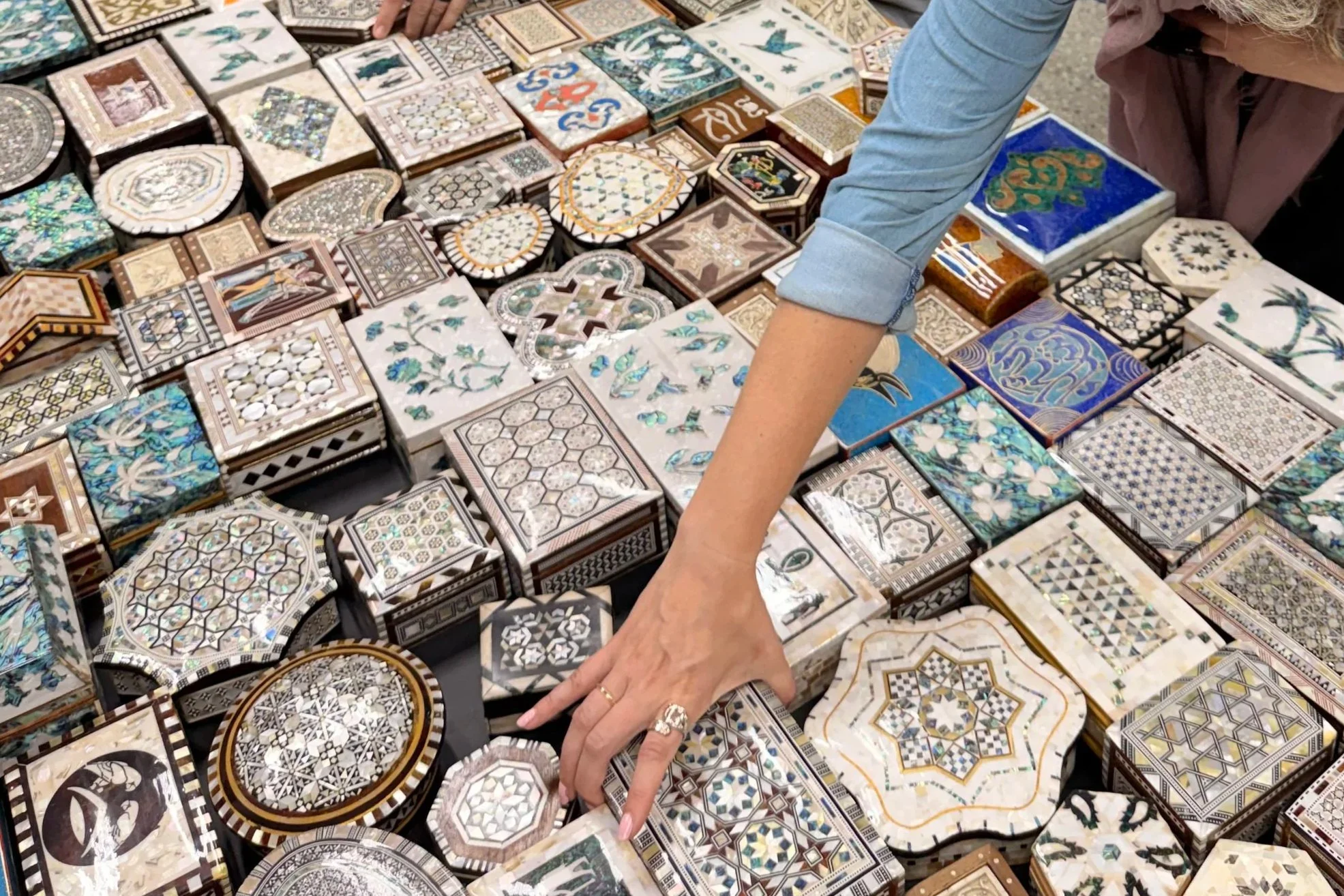
Our guests shopping for locally made wares in Cairo
There is a particular kind of energy in an Egyptian marketplace. It is loud, crowded, and unapologetically intense. To travel through it is to enter a dance of constant negotiation and unexpected connections. To navigate this rhythm effectively, you need to understand more than just the exchange rate—you need to understand the economic reality on the ground.
The Economic Landscape: Devaluation & Inflation
Egypt's financial terrain has undergone massive shifts. Following the historic currency floatation by the Central Bank of Egypt, the Egyptian Pound (EGP) devalued significantly against foreign currencies—moving from roughly 30 EGP per USD to around 50 EGP per USD .
For international travelers, foreign currency stretches further on everyday street food, local transport, and handmade crafts. However, this shift triggered sharp domestic inflation for everyday goods, energy, and tourist services. Understanding this gives you important empathy: haggling down to the last single dollar might mean pennies to a visitor, but it represents real purchasing power for an Egyptian merchant navigating rising living costs.
Cash vs. Card: The Dual Economy
Egypt runs on a dual payment reality where carrying both plastic and paper is non-negotiable. Expect to pay in cash 70% of the time however. Cash is easy to access at ATM’s at most hotels and tourist destinations.
1. The Strict Cashless Rule for Monuments (on our tours, this is already included)
The Egyptian Ministry of Tourism and Antiquities operates a strictly cashless system across more than 110 major archaeological sites and museums .
Ticket kiosks at the Pyramids of Giza, the Valley of the Kings, Karnak Temple, Abu Simbel, and the Egyptian Museum in Tahrir reject cash banknotes .
You must pay with a Visa or Mastercard (ensure foreign transaction fees are waived and international travel notices are turned on), or purchase e-tickets in advance via the official portal at egymonuments.com .
2. Cash is King in Daily Life
Outside ticket gates and high-end hotels, daily life runs strictly on Egyptian Pounds.
Taxis, felucca rides on the Nile, souk vendors at Khan el-Khalili, corner kiosks, and tips require local paper cash.
The USD Rule: Arrive with a clean reserve of $300–$500 in US Dollars . Egyptian banks and exchange kiosks strictly demand pristine, crisp, uncreased bills with no tears, stamps, or pen marks. Older or damaged bills are routinely rejected .
The Small Bill Strategy (Baksheesh Mechanics)
In Egypt, tipping (baksheesh) is neither a mere courtesy nor an unwelcome tax . It is a fundamental social contract that supplements low base wages across hospitality and transit.
The ATM Problem: Egyptian ATMs primarily dispense large 200 EGP and 100 EGP banknotes. If you try to hand a 200 EGP note to a taxi driver for a short fare or a bathroom attendant, they will rarely have change.
The Small Bill Rule: Treat 10, 20, and 50 EGP notes like gold . Break large 200 EGP notes at larger grocery stores, major pharmacies, or international chain cafés, and keep a stash of smaller notes easily accessible in a pocket separate from your main wallet .
Tip in Local Currency: Avoid tipping small amounts in foreign coins or loose $1 USD bills . Local workers cannot exchange foreign coins or individual $1 bills at official exchange bureaus .
| Service | Suggested Tip (EGP) |
|---|---|
| Restroom Attendant | 10 – 20 EGP |
| Hotel Porter (per bag) | 20 – 30 EGP |
| Housekeeping (per day) | 30 – 50 EGP |
| Sit-down Restaurant Server | 10% – 12% cash on top of the bill |
| Full-day Driver | 200 – 300 EGP |
| Private Egyptologist Guide | 300 – 500 EGP per day |
Navigating the Friction
Travel in Egypt carries a natural friction. Between currency fluctuations, navigating cashless site gates, and haggling in bustling alleyways, the process requires patience. The goal is not to avoid the friction, but to arrive equipped for it. With your cards configured for monument entry, crisp USD backup bills secured, and a pocket full of small Egyptian pounds, money transitions from an obstacle into a seamless bridge to connecting with Egypt.